
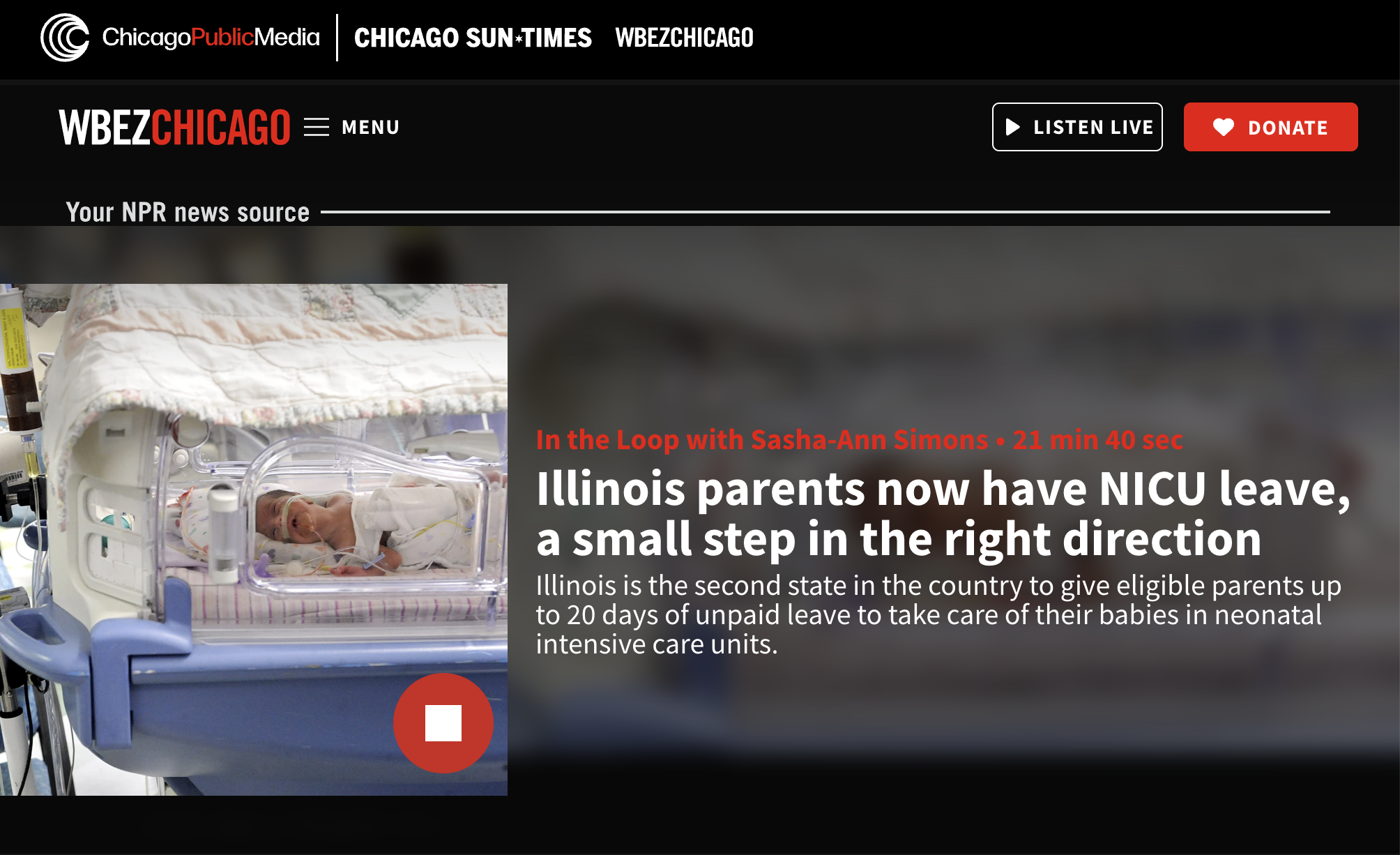
A new Illinois law aimed at supporting families with babies in neonatal intensive care units (NICUs) officially took effect on June 1, making Illinois only the second state in the nation to provide eligible parents with additional job-protected leave while their newborns receive critical medical care.
To discuss what the new law means for families, WBEZ Chicago's In the Loop with Sasha-Ann Simons invited Amanda Santoro, president and co-founder of The Little Giraffe Foundation, to share her family's NICU journey and explain how additional leave could help parents facing some of the most difficult days of their lives.
The Family Neonatal Intensive Care Leave Act entitles eligible parents to up to 20 days of unpaid leave if their child is admitted to a NICU. The leave is available in addition to protections already provided under the federal Family and Medical Leave Act (FMLA).
WBEZ Chicago's In the Loop with Sasha-Ann Simons invited several Chicago-area parents to share their experiences navigating lengthy NICU stays and the challenges families face while balancing work, recovery, and caring for medically fragile infants.
Reflecting on her own experience, Santoro explained how limited leave options forced difficult decisions during one of the most challenging periods of her life.
"I actually chose to go back to work two days after I gave birth to preserve the remaining FMLA time," Santoro said.
Because her twins were expected to spend months in the NICU, Santoro and her family felt they needed to save as much leave as possible for the time after their babies came home.
"We knew that we would probably have three and a half, four months in the NICU, and if we take our FMLA time at that time, you have zero days left when those babies come home," she said.
While the new law provides unpaid leave, Santoro noted that the additional protected time would have made a meaningful difference during her family's NICU journey.
"Though it would have been unpaid, that time would have been valuable to help me be more part of their care and help with physical recovery," she said.
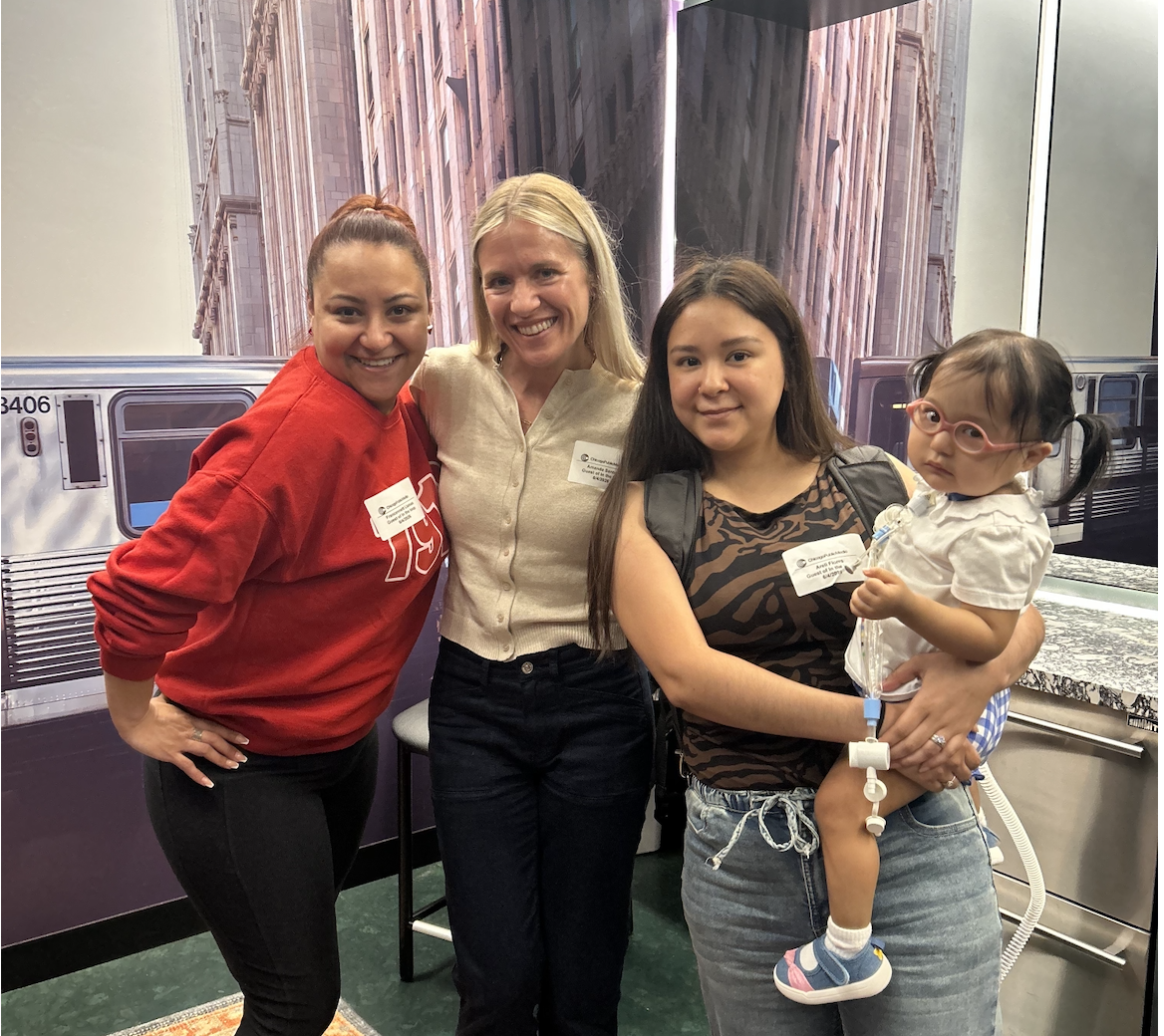
Santoro was joined by Francennett Llamas, founder of The Little Warriors Project, and Chicago mother Areli Flores, whose daughter spent nearly six months in the NICU. Each shared firsthand accounts of the emotional, physical, and financial strain that families often experience during extended hospital stays.
Llamas called the legislation "a great start," emphasizing the importance of job protection for parents whose babies may spend weeks or months receiving intensive medical care.
Flores described the confusion and uncertainty she experienced after unexpectedly learning her newborn would require specialized care, highlighting the need for greater awareness of NICU experiences and resources available to families.
The conversation also featured Dr. Catherine Groden, a neonatologist with UChicago Medicine, who discussed the critical role parents play in their infants' development and recovery while in the NICU. She explained that parental presence -- including skin-to-skin contact, comforting touch, and simply hearing a parent's voice -- can have measurable benefits for babies receiving intensive medical care.
For Santoro, the discussion also provided an opportunity to highlight the ongoing work of The Little Giraffe Foundation, which she and her husband founded in 2011 following the loss of of their daughter while her twin brother remained hospitalized in the NICU.
The organization was created to support families navigating the isolation and uncertainty of a NICU stay. Today, The Little Giraffe Foundation partners with hospitals throughout the Chicago area to provide care packages and gifts to NICU families and has distributed more than 38,000 gifts since its founding.
"When our babies got a gift, we were actually pretty surprised that, 'Oh, someone knows we're in here,'" Santoro said. "That feeling was really impactful on us. We wanted to pay that forward."
In addition to family support programs, the foundation provides grants to hospitals and nonprofit organizations that serve NICU families, helping fund initiatives ranging from family assistance programs to equipment that strengthens connections between hospitalized infants and their parents.
As Illinois families begin to benefit from the new leave protections, advocates and parents alike hope the law represents another step toward recognizing the unique challenges NICU families face and ensuring they have the support they need during one of the most difficult times of their lives.
To listen to the full segment visit WBEZ Chicago.